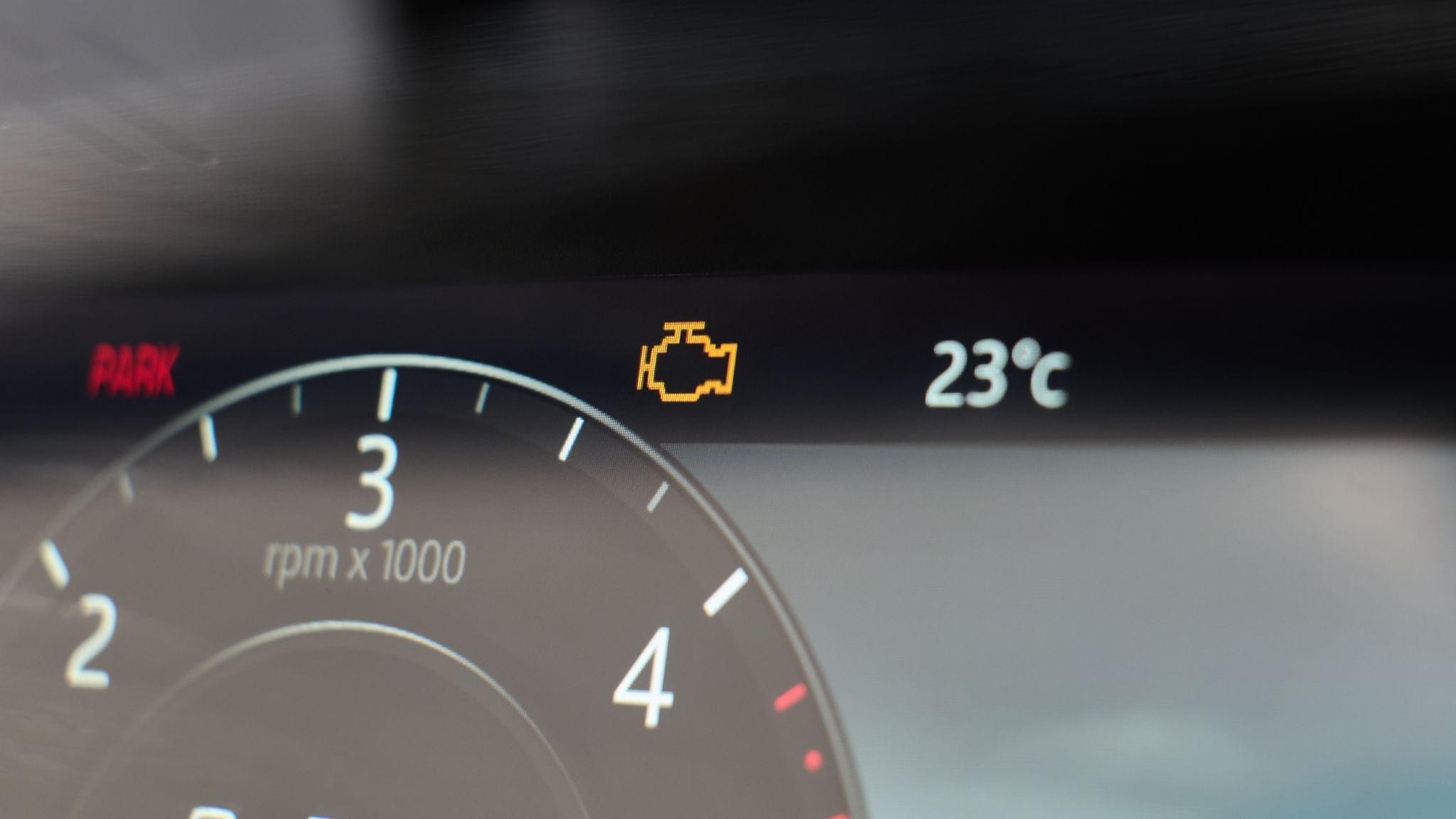
Ah, everyone’s favourite feature in their car, the one we all know too well: the check engine light.
If your check engine light suddenly appears on your dashboard, it’s easy to ignore, or at least pretend you didn’t just see it flashing. But what happens when it’s not flashing and instead just stays on? Believe it or not, they aren’t the same thing!
Why is my check engine light flashing? you may ask. Is there something wrong with my car? Is it something minor, or could it be a serious issue? Is my car done for? And most important of all—can I keep driving?
Here’s the short of it: your vehicle’s check engine light is an early warning system designed to alert you to potential problems before they escalate. Whether it’s a simple fix or something more complex, getting it checked by a trusted local mechanic is the safest and smartest move.
The check engine light is part of your car’s onboard diagnostics system (OBD). It monitors various components such as the engine, transmission, fuel system, and emissions to ensure everything is operating efficiently.
When something isn’t functioning as it should, the system triggers the dashboard light. This could be due to anything from a loose fuel cap to a more serious engine fault.
A professional car diagnostic service is the most accurate way to identify the exact issue. Modern vehicles rely heavily on electronic systems, so guessing the cause without proper diagnostics can lead to unnecessary repairs or overlooked problems.
There are many reasons why your check engine light may be on. Some of the most common include:
While some of these issues are minor, others can significantly affect your vehicle’s performance, fuel efficiency, and long-term reliability. No guesswork allowed here, and DIY fixes are hard to recommend: it is best to have your car inspected by a professional to determine how severe the problem actually is.
Sometimes your check engine light will flash or stay solid. Understanding the difference between a solid and flashing light can help you determine how urgent the situation is.
A solid light typically indicates a non-urgent issue. Your car may still be drivable, but it’s a sign that something isn’t working as efficiently as it should.
Common causes include minor sensor faults or emissions issues. While you may be able to continue driving for a short time, it’s still important to have the problem diagnosed before it worsens.
A flashing check engine light indicates a serious problem, often related to engine misfires. This can damage critical components if ignored.
In this case, you should stop driving as soon as it is safe to do so and arrange for an immediate inspection.
While a solid light may allow for limited driving, a flashing light should never be ignored. Continuing to drive with serious faults can lead to costly damage across critical systems and components.
Contact a local mechanic ASAP, or else your car’s performance may deteriorate irreparably. You may very well need transmission service or suspension repairs.
Whether you can keep driving with your check engine light on depends on the severity of the underlying issues. Here’s how to assess your situation:
Even in these cases, you should still book an inspection as soon as possible.
Driving under these conditions can cause serious damage and put your safety at risk.
Ignoring your check engine light might seem harmless at first, but it can quickly lead to bigger and more expensive problems down the track. What starts as a simple fix, like replacing a sensor, can escalate into serious issues such as catalytic converter damage.
Over time, underlying engine faults can worsen, potentially leading to costly repairs or even a full engine rebuild. You may also run into issues during your next inspection for a roadworthy certificate in Melbourne, as unresolved faults can cause your vehicle to fail.
On top of that, skipping regular maintenance—like a logbook service—can also affect your warranty and reduce your car’s resale value. Addressing issues early on is always the safer and more cost-effective choice.
When your check engine light comes on, the first step is understanding exactly what your car is trying to tell you. While it might be tempting to guess the issue or rely on a quick online search, modern vehicles are far more complex than they appear.
A structured, step-by-step diagnostic process is the most reliable way to identify the problem accurately and avoid unnecessary repairs.
A qualified technician uses specialised tools to connect to your vehicle’s onboard computer and retrieve fault codes. These codes provide insight into what’s causing the issue.
However, codes alone don’t tell the full story—they require expert interpretation to pinpoint the root cause.
While DIY scanners can give you a general idea, they often lack the accuracy and depth needed for proper diagnosis. Misinterpreting codes can lead to unnecessary part replacements or missed issues.
Working with a trusted mechanic in Tullamarine or a mechanic in Essendon will ensure your vehicle receives a thorough and accurate assessment.
Some frequently seen codes include:
Each of these requires further testing to confirm the exact cause and appropriate repair.
Yes, different manufacturers can experience different common issues due to variations in design and engineering. At S.S.C. Mechanics, we are qualified to work on any make or model of car.
Japanese vehicles are known for reliability, but common check engine triggers can include sensor wear, ignition issues, or emissions-related faults.
Regular Toyota servicing or partnering with a specialist Mazda mechanic can help prevent recurring issues.
European vehicles often feature more complex electronics and performance systems, which can lead to more sensitive diagnostic alerts.
Routine Audi servicing and Volkswagen servicing ensure these systems remain in optimal condition for years.
Check engine lights are frequently overlooked in high-demand industries where vehicles are constantly in use, such as:
In these environments, downtime is costly, so minor warning signs are often ignored until they become major problems. Investing in regular fleet servicing helps prevent breakdowns and keeps vehicles running efficiently.
If your check engine light is on, don’t ignore it! Whether it’s a minor fix or a more complex issue, getting a professional diagnosis early can save you time, money, and stress.
At S.S.C. Mechanics, our experienced team uses advanced diagnostic tools to quickly identify and resolve faults, keeping your vehicle safe, reliable, and roadworthy. Give us a call today on (03) 9338 9573 or 0430 928 764 to discuss how we can help.
Book your inspection today and get peace of mind knowing your car is in expert hands!
At S.S.C. Mechanics, we provide professional car repair services for Melbourne’s northwest on a variety of major mechanical and electrical makes and models.
Based in Airport West, we are proud to serve customers from the surrounding areas, including:
And more locations surrounding Melbourne’s northwest!
BACK TO BLOG
Get In Touch With Us
Fill out this form and one of our friendly team members will get back in touch with you shortly.


 Click to Call Now

 CALL US: