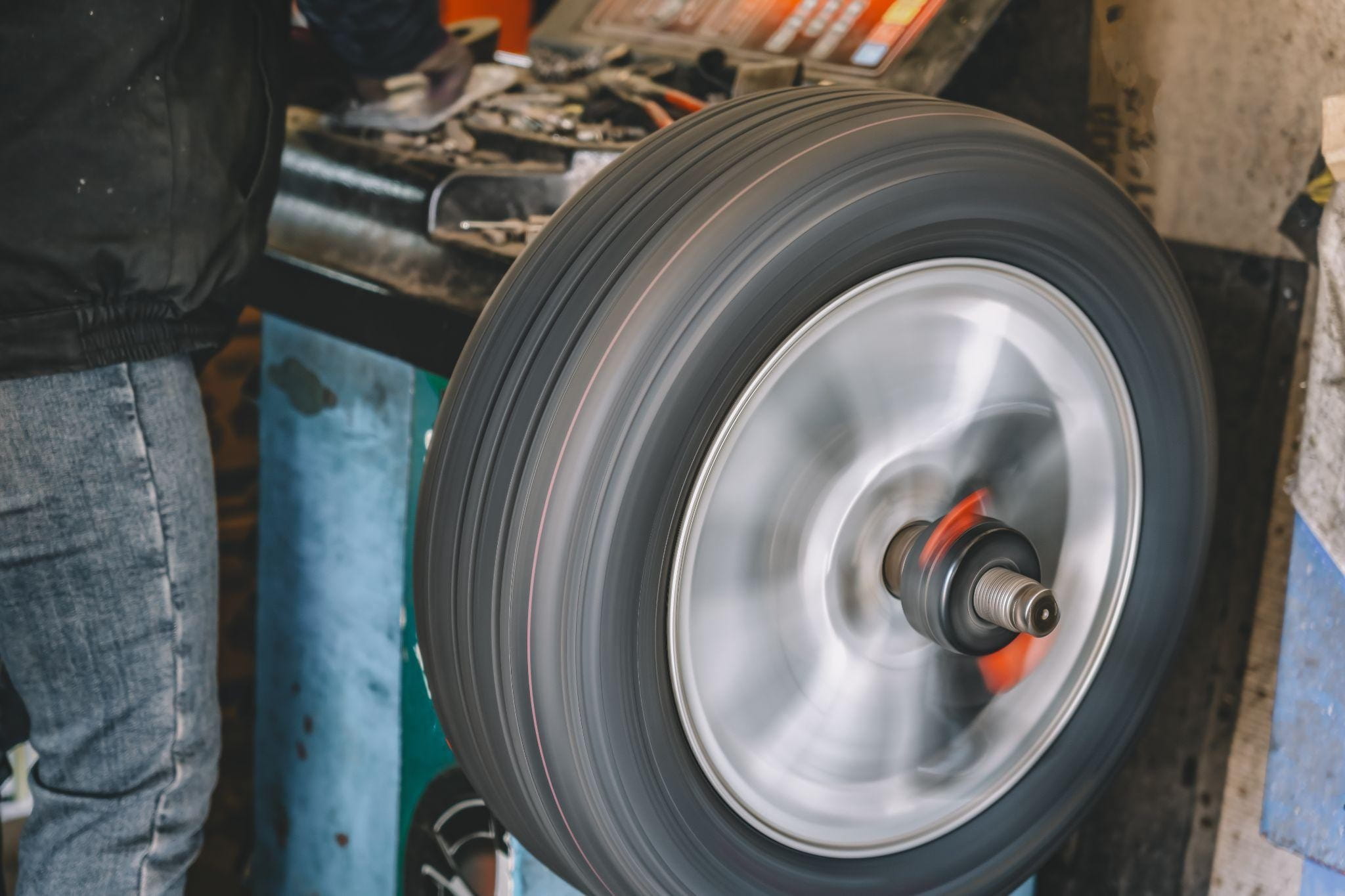
It can be quite alarming when you’re driving on the road and suddenly feel your car vibrating when your speed increases. Automobiles are loud and naturally produce a lot of movement, but when a car starts to physically shake while driving fast… it’s hard to ignore.
So why does your car feel so shaky sometimes? A car that vibrates at high speed is commonly caused by wheel imbalance, tyre issues, worn CV joints, suspension problems, or other drivetrain components.
Repairing vibration issues like these is often easy, assuming the cause is correctly diagnosed. Properly identifying when and where the vibration occurs will help narrow down the cause, but only a skilled and licensed mechanic in Melbourne can determine it.
At S.S.C. Mechanics, our team of specialists are proficient at diagnosing vehicle vibrations in Melbourne cars, providing expert advice and remedies for local drivers. In this guide, we explore the main causes of a vibrating car and how much it may cost to repair.
Wheel imbalance is one of the most common causes of a car vibrating at high speeds, particularly between 80 and 110 km/h. If you have not heard about wheel imbalance before, then here are some common signs to look out for.
Wheel imbalance occurs when the weight of the tyre and wheel assembly is unevenly distributed, causing vibrations that become more noticeable at higher speeds. These vibrations can often be felt through the steering wheel, floor, or seats.
As speed increases, centrifugal force amplifies the imbalance, causing the wheel to bounce or wobble and making the vibrations progressively worse. This is why you may only notice your car vibrating when driving fast on highways or for an extended period, like during a road trip.
The symptoms of wheel imbalance often become more noticeable as speed increases, particularly at freeway speeds. Wheel imbalance can feel different across various makes and models, and when coming from either the front or the rear of the car.
Common signs of wheel imbalance include:
If you experience any of these symptoms and are worried, then consider booking your car in for a routine service as soon as convenient.
Thankfully, depending on the total work required, wheel balancing is usually pretty affordable. In Melbourne, you can typically expect to pay $15 to $30 per wheel, or $60 to $120 for all four wheels, depending on the vehicle’s make and model and your mechanic’s service fees.
In many cases, wheel balancing alone is enough to eliminate most high-speed vibrations caused by uneven weight distribution. However, if the issues persist, your vehicle may also require a wheel alignment, tyre repair, or even a suspension inspection.
While wheel imbalance can cause cars to vibrate, the cause may also be the tyres themselves. Damaged or unevenly worn and flat tyres are also common causes of cars shaking at highway speeds.
Uneven wear and tear on tyres can cause vibrations because the weight and force are no longer distributed properly across the tyre’s surface. This affects how the car feels when travelling fast and is noticeable throughout the vehicle.
Causes of uneven tyre wear can include:
Similarly, tyres that are either uneven or flat can cause vibrations. These issues can be caused by high-impact damage, internal tyre separation between layers of material, or flat spots on the tyre’s surface from prolonged overuse.
A tyre with a visible bulge should be inspected immediately, as it may indicate internal damage and an increased risk of failure. Flat spots may sometimes improve with driving, but persistent vibration or uneven wear may require tyre replacement.
One less common culprit for a vibrating car is worn CV joints. When CV joints are ready for replacement, they can cause noticeable vibration during acceleration and when travelling on highways.
Constant velocity joints, or CV joints, connect your wheels to your car’s transmission, allowing power to transfer smoothly as the suspension moves and the wheels turn. They typically fail when their protective rubber covering cracks or tears, allowing grease to leak and dirt or moisture to damage the joint.
CV joint repairs in Melbourne typically cost between $300 to $800 per joint, depending on the vehicle make and model, the parts required, and the extent of the damage. In many cases, replacing the CV axle assembly is more common than repairing the individual joint.
Addressing problems early can help prevent additional damage to your vehicle’s surrounding components, such as the driveshaft, wheel bearings, or transmission, reducing the risk of more expensive repairs down the road.
It is important to understand the differences between CV joint and wheel balance symptoms.
| CV Joint Symptoms vs. Wheel Balance Symptoms | |
|---|---|
| Wheel Balance | CV Joint |
| Vibration mostly at certain speeds | Often worse under acceleration |
| Steering wheel vibration | May include clicking on turns |
| Usually no noises | Clicking or clunking noises |
| Improves after balancing | Requires mechanical repair |
By understanding which of these mechanical issues is impacting your car, you will be able to properly resolve the problem and stop your car from vibrating at highway speeds.
Now, if your wheels and tyres all check out, then there are several other components that may be responsible for the vibration. Here are some other causes of your car vibrating while driving.
Damaged shocks, struts, or bushings allow your vehicle’s weight to shift uncontrollably, causing the car to bounce excessively over bumps and sag or lean heavily during tight turns. As such, worn suspension components can cause a vibration while driving at high speeds.
These tightly packed steel balls allow your wheels to spin freely with minimal friction, but they can produce a loud, low-pitched humming or roaring sound that gets louder as the vehicle accelerates. This roaring can produce a vibration when the car moves fast enough, and can sometimes be heard throughout the whole vehicle.
Severe heat and friction can cause your car’s brakes to develop an uneven surface over time, creating a distinct pulsing sensation in the brake pedal and steering wheel. This means that whenever you slow down, especially after going very fast, you may feel vibration when braking.
The costs of diagnosing and fixing car vibration issues in Melbourne can vary. Depending on whether the issue is simple wheel balancing or a more complex mechanical repair.
| Problem | Typical Melbourne Cost |
|---|---|
| Wheel balancing | $60–$120 |
| Wheel alignment | $80–$150 |
| New tyre | $150–$400+ per tyre |
| Suspension repair | $300–$1,500+ |
| Wheel bearing replacement | $300–$800 |
| CV joint replacement | $300–$800+ |
| Diagnostic inspection | $100–$200 |
Most car vibration issues are pretty straightforward when accepted by an expert mechanic. At S.S.C. Mechanics in Airport West, our team can diagnose problems with wheel balancing, tyres, suspension, brakes, and more, so you can get your vehicle back on the road safely as soon as possible.
If you’ve noticed unusual vibrations, then book a diagnostic services with us today and have any developing issues checked early. Whether you’re in Essendon, Keilor, Keilor East, Moonee Ponds, Niddrie, Pascoe Vale, Tullamarine, Aberfeldie, Glenroy, Gladstone Park, Oak Park, Westmeadows, or North Melbourne, visit your nearest S.S.C. Mechanics for smoother driving today and tomorrow!
If your car shakes when driving at 100 km/h, you likely have a wheel balancing issue.
It is safe to drive short distances when your car vibrates, but at high speeds it can be dangerous. Book an appointment with your mechanic as soon as you are able.
New tyres will still need to be balanced and aligned correctly to avoid vibration while driving.
BACK TO BLOG
Get In Touch With Us
Fill out this form and one of our friendly team members will get back in touch with you shortly.


 Click to Call Now

 CALL US: