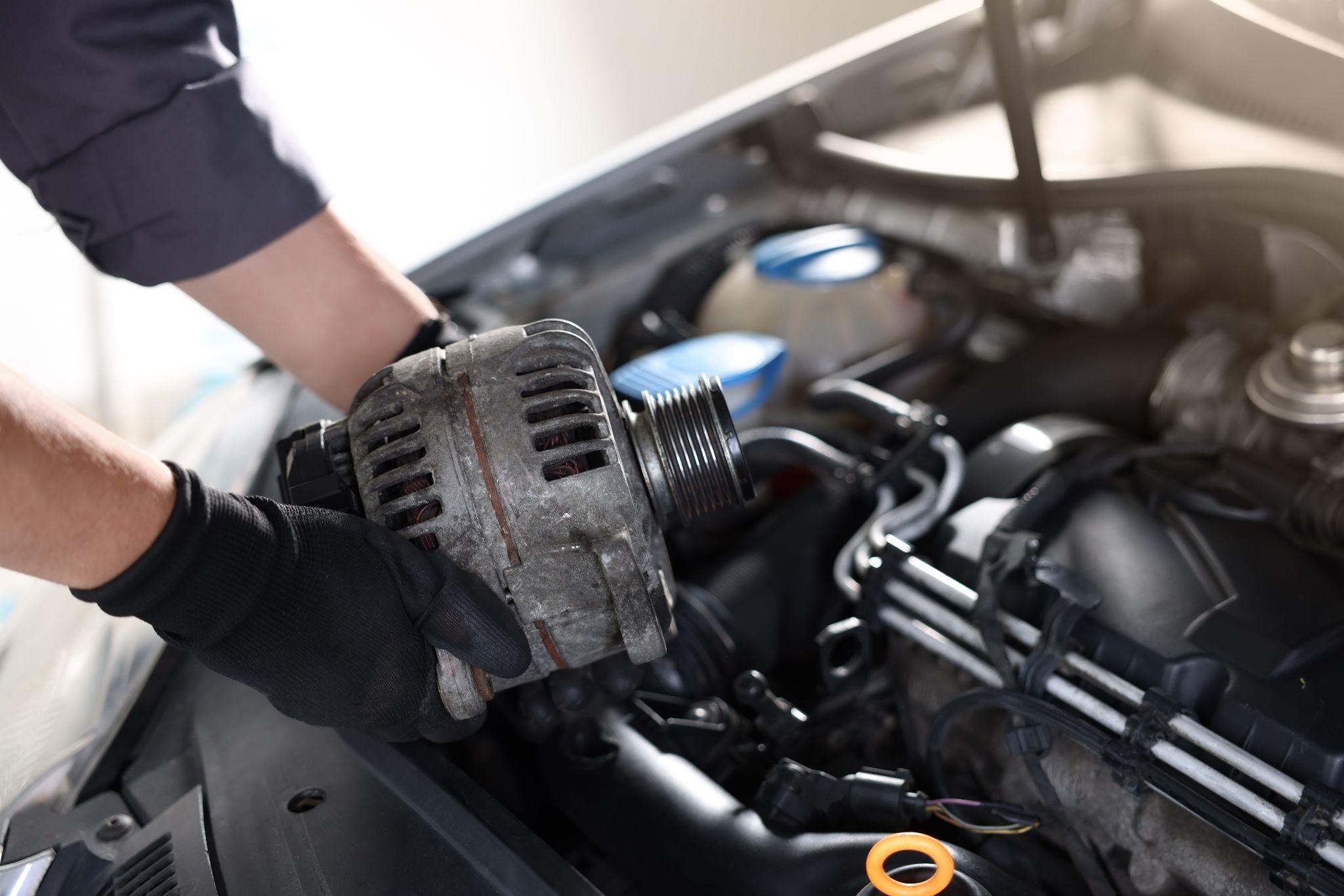
Is your car not starting? Are your dashboard lights blinking like crazy? You know something is wrong with your car, and your instincts tell you it’s either an alternator issue or a faulty battery… But which one is it?
Battery and alternator complications are some of the most common automotive mechanical problems we see at S.S.C. Mechanics, as well as some of the most confusing. A flat battery and a failing alternator can present almost identical symptoms, yet the fix (and cost) can be very different.
Knowing how to tell the difference can save you time, money, and the frustration of replacing the wrong part.
At first glance, battery and alternator issues overlap heavily. Both can cause:
Because of this, many drivers assume that when things don’t work right, it must be a battery issue, only to replace it and end up with the same problem days later.
That’s often because the real culprit was the alternator all along.
Your car’s electrical system relies on both components working in sync.
The battery provides the initial burst of power to start the engine, and the alternator takes over once the engine is running, supplying power and recharging the battery.
If either fails, the system breaks down: a bad battery results in a car that won’t start, whereas a bad alternator causes battery drain while driving.
Yes, these components depend on each other.
A faulty alternator can overcharge or undercharge the battery, shortening its lifespan, and a failing battery can put extra strain on the alternator, forcing it to work harder.
Ignoring one problem can quickly lead to another.
Drivers frequently experience battery issues, although they can present differently depending on what is happening under the bonnet. Sometimes a simple battery replacement will be enough to get you back on the road, or deeper electrical issues may be the cause.
If the engine turns over slowly or struggles to start, then your battery may not have enough charge to power the starter motor effectively.
A rapid clicking noise when turning the key is a classic sign of insufficient battery power.
If a jump start gets you going but the car fails again shortly after being turned off, then your battery likely isn’t holding a charge.
If you’re unsure what exactly may be the problem with your battery, then it’s best to have a professional mechanic test it for a quick diagnosis.
While similar to battery problems, some less obvious issues can actually present themselves as alternator issues, instead. For a proper fix, you’ll likely require a professional alternator repair service.
If your car starts normally but stalls soon after, then your alternator may not be supplying enough power to keep it running.
Electrical components rely on steady voltage. Flickering or dimming lights while driving often point to alternator issues.
If you’ve recently replaced your battery and it’s already flat, the alternator may not be recharging it.
Grinding or whining noises, or a burning rubber smell, can all indicate worn alternator bearings or a failing belt.
If the alternator is not the culprit, then your car may require a more extensive diagnostic service to identify the root cause of the problems.
A jump-start can sometimes get your car going again and even help you work out whether you’re dealing with a flat battery or a failing alternator. The key is to follow the process carefully and observe what happens after the car starts.
If you are not confident that you can perform a jump start safely, then contact us for emergency assistance instead.
Park both cars facing each other or side-by-side. Turn both engines off, engage the handbrakes, and remove the keys from the ignition.
Locate the battery in each car and identify:
Follow this exact sequence:
This grounding step reduces the risk of sparks near the battery.
Start the donor car and let it run for 2 to 3 minutes. This allows some charge to transfer to the flat battery.
Try starting the car with the flat battery:
Once started, keep the engine running for at least 5–10 minutes. This is important for the diagnostic step.
Remove the cables in reverse:
Now comes the important part: what does your car do after the jump start?
If the engine continues to run smoothly after removing the leads, the alternator is likely doing its job!
Most likely issue: Battery problem, not holding a charge.
If the car runs but seems weak, dim, or inconsistent, it could indicate either a weak alternator or a battery that’s severely degraded.
Next step: Get both tested to be sure.
If the engine dies within seconds or minutes, then the alternator likely isn’t supplying power.
Most likely issue: Alternator failure.
Modern vehicles rely on increasingly complex electrical systems, which means the symptoms of a battery or alternator issue aren’t always obvious.
If you’re still unsure what’s causing the problem, the smartest next step is to book in with a professional. A qualified mechanic in Tullamarine or an experienced Essendon mechanic, for instance, can carry out accurate diagnostic testing to identify the fault and recommend the right fix, saving you time, money, and guesswork.
Replacing just one component without testing the other is a common mistake. A proper inspection should always include:
Booking a logbook service is a smart way to catch these issues early and keep your vehicle running reliably.
Battery replacements are generally quick and affordable, often costing under $350 for most standard vehicles in Australia. Alternator replacements, on the other hand, are significantly more expensive due to higher part costs and labour, typically ranging anywhere from $400 to $1,500+ depending on the vehicle.
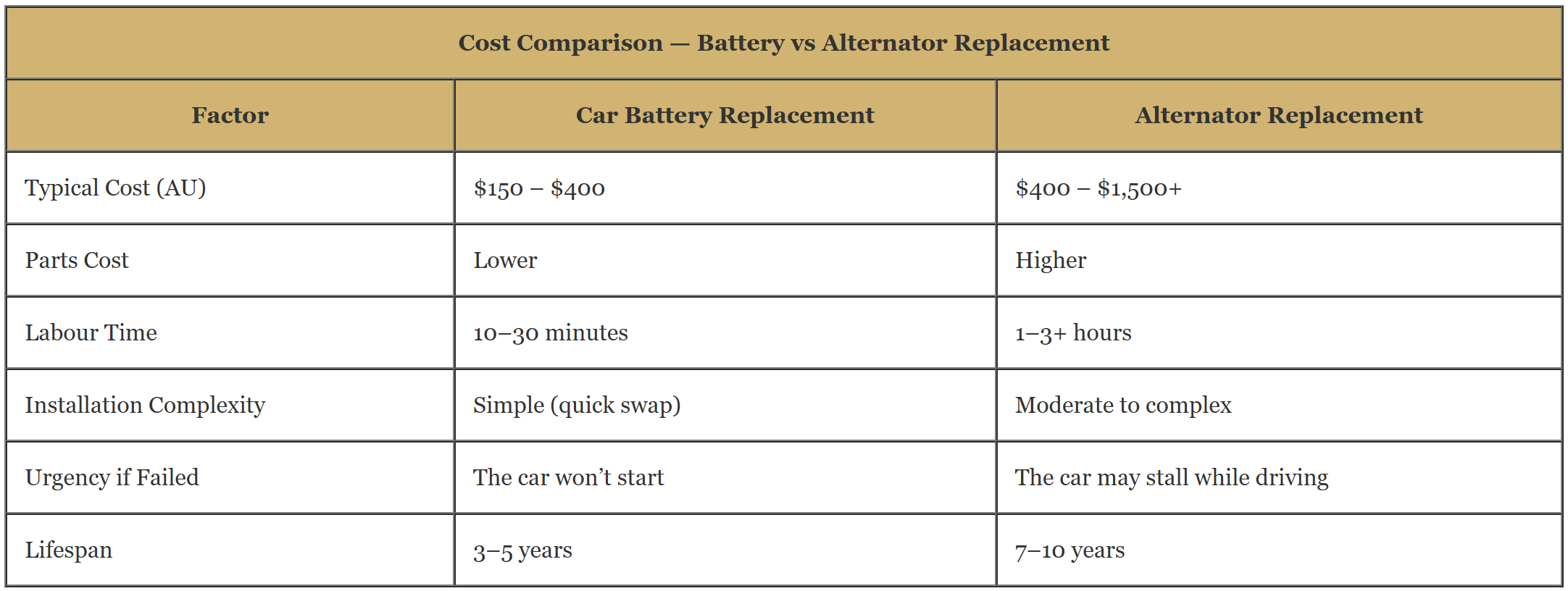
Bottom line: If your car won’t start, it’s often a cheaper battery fix, but if it dies while driving, expect a more complex and costly alternator issue.
Electrical issues rarely fix themselves—and guessing between a battery and an alternator can cost you more in the long run. The safest move is to get a proper diagnosis before a small issue turns into a roadside breakdown.
If your car is showing any of the signs above, book it in with a trusted mechanic near you.
for a fast, accurate check. Whether it’s a simple battery replacement or a full alternator repair, getting the right fix the first time means less stress, fewer surprises, and a car you can rely on every day.
Don’t wait until it won’t start—get ahead of the problem and drive with confidence with a licensed mechanical inspection from your local S.S.C. Mechanics!
Typically, 3 to 5 years, though heat and driving conditions can shorten its lifespan.
Most alternators last between 7 and 10 years, depending on usage and vehicle type.
Yes. If the alternator isn’t charging properly, even a brand-new battery will go flat quickly.
Not for long. Once the battery drains, the car will stall and won’t restart.
Usually between $500 and $1,500+, depending on the vehicle and parts required.
Common sounds include whining, grinding, or squealing from worn bearings or belts.
Not always, but if one has failed, both should be tested. In some cases, replacing both can prevent repeat issues.
BACK TO BLOG
Get In Touch With Us
Fill out this form and one of our friendly team members will get back in touch with you shortly.


 Click to Call Now

 CALL US: